Dermatologists Are Tired of Watching You Waste Money on Fancy Moisturizer
There's a very specific kind of guilt that hits when you're standing in a Sephora, holding a tiny jar of face cream that costs more than your electric bill. The packaging is heavy. The font is elegant. The sales associate just used the phrase "biomimetic peptide complex" with complete confidence. And somehow, you leave with it anyway.
This happens millions of times a year across the US. The premium skincare industry pulled in over $18 billion domestically in 2023, and a significant chunk of that money is being spent on something that has very little to do with what's actually inside the bottle.
We wanted to know: what are consumers actually paying for when they go premium? So we compared ingredient labels, consulted board-certified dermatologists, and did a deep dive into the manufacturing economics of the skincare world. The short version? You're mostly paying for a story.
The Ingredient List Doesn't Lie — But the Marketing Does
Here's a useful exercise: pull up the ingredient list for a high-end moisturizer — say, something in the $120-$200 range — and then compare it to a well-reviewed drugstore option in the $12-$20 range. Do this on an ingredient comparison site like INCI Decoder or CosDNA, and you'll notice something uncomfortable pretty quickly.
The active ingredients — the ones actually doing the work on your skin — are often nearly identical. Hyaluronic acid is hyaluronic acid. Niacinamide is niacinamide. Retinol is retinol. These compounds don't get fancier or more effective because they're packaged in a frosted glass jar with a magnetic lid.
Dr. Rachel Nazarian, a board-certified dermatologist based in New York, has been vocal about this in interviews and on social media. Her position, shared by many of her peers, is straightforward: "The active ingredients in skincare are well-established and relatively inexpensive to manufacture. What you're often paying extra for is fragrance, texture, packaging, and brand prestige."
That's not nothing — texture and elegance matter to some people — but it's worth knowing that's what you're buying.
What Does a 300% Markup Actually Cover?
Let's talk numbers. Cosmetic chemists have noted publicly that the actual manufacturing cost of a typical moisturizer — including raw materials, production, and quality testing — often lands somewhere between $2 and $8 per unit, even for formulas with genuinely good ingredients. A product retailing for $150 isn't doing so because the formula costs $150 to make.
So where does the rest go? A rough breakdown:
- Retail margins: Sephora, Nordstrom, and department store counters typically take 40-60% of the retail price.
- Marketing and advertising: Premium brands routinely spend 20-30% of revenue on campaigns, influencer deals, and celebrity partnerships.
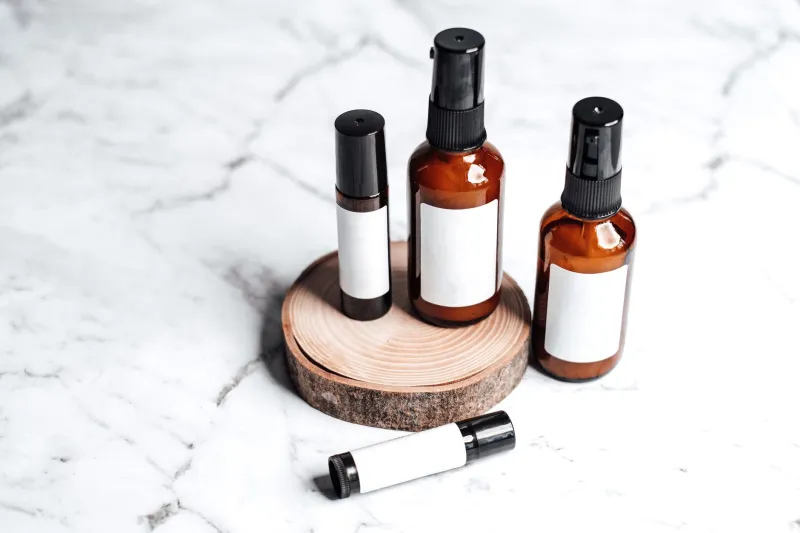
- Packaging: That heavy glass jar, the magnetic closure, the embossed outer box — these can cost more per unit than the formula itself.
- Brand licensing and prestige positioning: Luxury parent companies (think LVMH or Estée Lauder Companies) deliberately price products to signal exclusivity.
What's left for the actual formula? Often surprisingly little.
The Language of "Clinical" Skincare
Premium brands have gotten very good at sounding scientific. Words like "clinically proven," "dermatologist-tested," "biomimetic," and "patented technology" appear constantly on high-end packaging. But these phrases are mostly unregulated and frequently misleading.
"Dermatologist-tested" means a dermatologist looked at the product at some point — it doesn't mean they endorsed it or that it outperforms alternatives. "Clinically proven" often refers to a tiny, brand-funded study with no independent verification. "Patented" sounds impressive, but patents cover specific formulations or delivery mechanisms, not necessarily superior outcomes.
Dr. Shereene Idriss, a Manhattan-based dermatologist with a large public following, has pointed out that many of her patients come in having spent thousands of dollars on premium skincare while neglecting the basics that actually have strong clinical evidence behind them — namely sunscreen, retinoids, and consistent moisturization.
"I'd rather see someone use a $10 drugstore retinol every single night than a $300 'youth-activating complex' twice a week because it feels too precious to use regularly," she's noted.
Where Drugstore Products Actually Hold Up
This isn't a blanket endorsement of every cheap product on the shelf. Formulation quality does vary, and some affordable products cut corners in ways that matter — using lower concentrations of active ingredients, relying on irritating fillers, or skipping stabilizers that keep actives effective over time.
But the gap between drugstore and luxury isn't nearly as wide as the price difference implies. Dermatologists frequently cite the following as legitimate over-the-counter options that punch well above their price:
- CeraVe Moisturizing Cream (~$17): Ceramide-based, fragrance-free, and recommended by dermatologists constantly. Manufactured by the same parent company (L'Oréal) as several luxury lines.
- Neutrogena Rapid Wrinkle Repair Retinol (~$22): Contains a proven retinol concentration in a stable formula.
- La Roche-Posay Toleriane Double Repair (~$20): Frequently recommended for sensitive skin and compares favorably to $100+ alternatives from the same parent company.
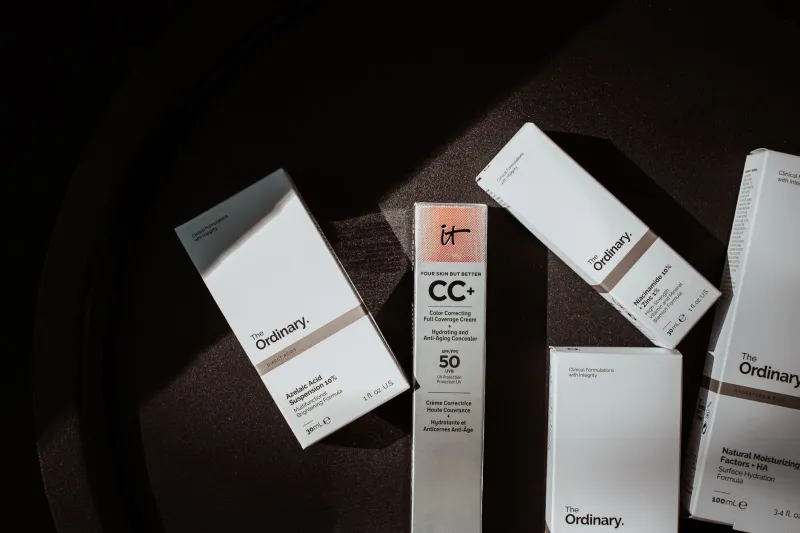
- The Ordinary (various, $5-$20): A brand that deliberately strips out the marketing markup and sells active ingredients at transparent concentrations.
The Ordinary is particularly interesting as a case study. It was built explicitly to expose how much of skincare pricing is theater. A 1% retinol serum from The Ordinary costs around $7. A comparable retinol concentration from a luxury brand can run $150. Same molecule. Dramatically different story around it.
When Premium Products Are Worth It
Fairness requires acknowledging the exceptions. There are cases where paying more makes sense:
Unique delivery systems: Some brands have genuinely developed more effective ways to stabilize or deliver active ingredients — encapsulated retinol, for example, can reduce irritation while maintaining efficacy. If you have sensitive skin and a $60 product with encapsulated retinol works better for you than a $10 one that causes flaking, that's a real trade-off worth making.
Prescription-adjacent formulas: Certain OTC products contain higher concentrations of actives that genuinely aren't available in budget lines. These are worth comparing on a case-by-case basis.
Texture and sensory experience: If a product's feel makes you more likely to use it consistently, that consistency has real value. Compliance matters in skincare.
But these are specific, justifiable reasons — not vague appeals to "luxury" or "science-backed" language that doesn't hold up to scrutiny.
How to Shop Smarter
A few practical moves:
- Start with the ingredient list, not the brand. Look up the key actives and their concentrations before you consider the price.
- Use INCI Decoder or SkinSort to compare formulas side by side.
- Ask your actual dermatologist, not a sales associate working on commission.
- Be suspicious of proprietary complex names. "Revitalift Pro-Retinol Complex" is often just retinol with a trademarked name slapped on it.
- Check the parent company. CeraVe is owned by L'Oréal, the same company behind Lancôme and Giorgio Armani Beauty. The supply chains are often more similar than the price tags suggest.
The skincare industry is very good at making you feel like your face deserves better than a $15 moisturizer. It doesn't. Your face deserves ingredients that work — and those are available at almost every price point. The fancy jar is optional.