You're Paying a Premium for 'Clean Beauty' — But What Does That Label Actually Mean?
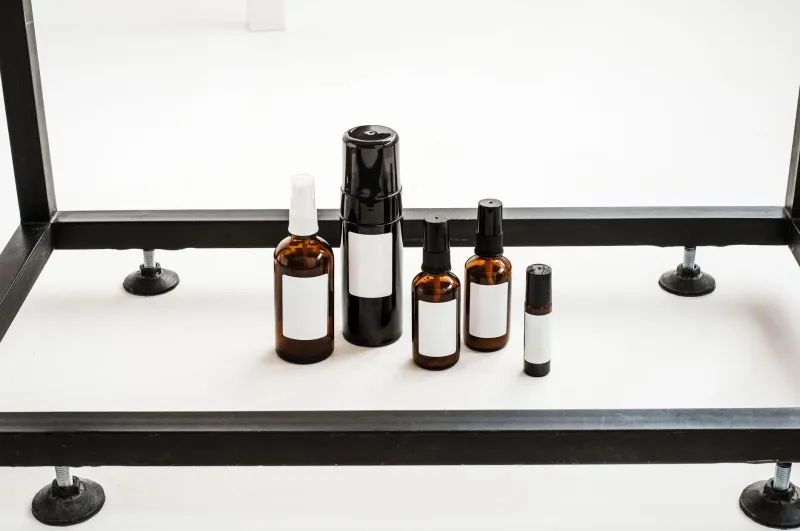
Walk through the skincare aisle at Sephora or Ulta and you'll see it everywhere: clean, non-toxic, free from harmful chemicals, nature-derived. These words carry a kind of moral authority, the suggestion that you're making a smarter, safer choice for yourself and maybe the planet too. And they often come attached to a price tag that's 30 to 80 percent higher than conventional alternatives.
Here's the uncomfortable truth: the term "clean beauty" has no legal definition in the United States. The FDA doesn't regulate it. No federal agency certifies it. Any brand can slap it on a label tomorrow morning, and nobody's going to stop them.
That doesn't automatically mean clean beauty products are bad. Some are genuinely well-formulated. But it does mean you're largely trusting a marketing department — not a regulatory body or a scientific consensus — when you reach for that $55 serum.
The Fear Economy Behind 'Non-Toxic' Claims
Clean beauty brands didn't invent consumer anxiety about ingredients — they just got very good at monetizing it. The playbook usually looks something like this: identify a chemical with a scary-sounding name, link it to alarming-sounding studies (often done on animals or at doses wildly above normal human exposure), then offer your product as the safe alternative.
Parabens are probably the most famous example. For years, clean beauty marketing hammered the message that parabens — preservatives used in cosmetics since the 1950s — were dangerous endocrine disruptors linked to breast cancer. The fear spread fast. Brands started stamping "paraben-free" on everything.
But here's what the science actually says: a 2004 study did detect parabens in breast tumor tissue, which sounds alarming. What that study did not show is that parabens caused the tumors. The American Cancer Society and the FDA have both reviewed the evidence and concluded there's no proven link between parabens at cosmetic exposure levels and cancer risk in humans. The EU's Scientific Committee on Consumer Safety reached a similar conclusion. Parabens, as used in cosmetics, are among the most well-studied preservatives out there.
The irony? Many "clean" brands replaced parabens with preservatives that are actually less studied and, in some cases, more likely to cause skin irritation.
So Are Any Ingredient Concerns Legitimate?
Fair question — and yes, some are. Not everything in the "clean beauty" conversation is manufactured panic.
Fragrance is one area where consumer caution is genuinely warranted. "Fragrance" or "parfum" on an ingredient label can legally represent a blend of hundreds of undisclosed chemicals. For people with sensitive skin, allergies, or conditions like eczema, fragrance is one of the most common irritants. If you have reactive skin, avoiding heavily fragranced products is solid, science-backed advice — though it's worth noting that plenty of conventional brands make fragrance-free options at totally reasonable prices.
Formaldehyde-releasing preservatives are another area with real, if limited, concern. Ingredients like DMDM hydantoin slowly release small amounts of formaldehyde over a product's shelf life. Formaldehyde is a known carcinogen at high occupational exposures. At the trace levels found in cosmetics, the risk appears low, but some dermatologists do recommend that people with sensitivities avoid them. Again — worth knowing, but not worth panic.
Oxybenzone in chemical sunscreens has gotten attention after studies found it can be absorbed into the bloodstream. The FDA has asked for more data on this. However, no study has demonstrated that this absorption causes harm in humans, and the CDC and dermatology organizations continue to emphasize that the risk of unprotected sun exposure far outweighs any theoretical concern about sunscreen ingredients.
What 'Natural' Doesn't Guarantee
One of clean beauty's sneakiest assumptions is that natural equals safe and synthetic equals dangerous. That's just not how chemistry works.
Poison ivy is natural. So is arsenic. Meanwhile, plenty of synthetic compounds are rigorously tested, stable, and effective. "Natural" and "safe" are not synonyms, and neither are "synthetic" and "harmful."
Some plant-derived ingredients — essential oils, citrus extracts, certain botanicals — are actually more likely to cause allergic reactions or photosensitivity than the lab-made alternatives they're supposed to replace. A clean beauty product loaded with botanical extracts can absolutely irritate your skin, even if every ingredient came from a plant.
How to Shop Smarter Without Overpaying
None of this means you should ignore ingredients entirely. Being an informed consumer is always a good call. But there's a difference between reading labels with curiosity and reading them with fear that a brand manufactured for you.
A few practical tools:
- EWG's Skin Deep database rates cosmetic ingredients, though it's worth knowing that EWG's methodology has been criticized by toxicologists for overstating risk. Use it as a starting point, not a final verdict.
- Look up specific ingredients on PubMed if you're concerned. You can often find actual research rather than a brand's curated interpretation of it.
- Check for third-party certifications that have actual standards behind them — COSMOS Organic, MADE SAFE, and EWG Verified all have documented criteria, unlike the word "clean" itself.
- Patch test new products, especially if you have sensitive skin. This is more useful than any marketing claim.
And honestly? If a drugstore moisturizer with "conventional" ingredients has been working great for your skin, there's no scientific reason to swap it for a $70 "clean" version. Your skin doesn't know the difference between a pretty label and a plain one.
The Bottom Line
Clean beauty has done one genuinely useful thing: it pushed the conversation about ingredient transparency forward, and some consumers are more engaged label-readers because of it. That's not nothing.
But the industry also profits heavily from vague promises, manufactured fear, and a regulatory vacuum that lets brands say almost anything. When there's no legal definition of "clean," every brand gets to write its own.
Before you pay extra for a clean beauty product, ask yourself: What specific claim is this brand making, and is there actual evidence behind it? That question will serve you better than any marketing badge ever will.