Skincare Brands Keep Saying 'Clinically Proven' — Here's How Little That Actually Means
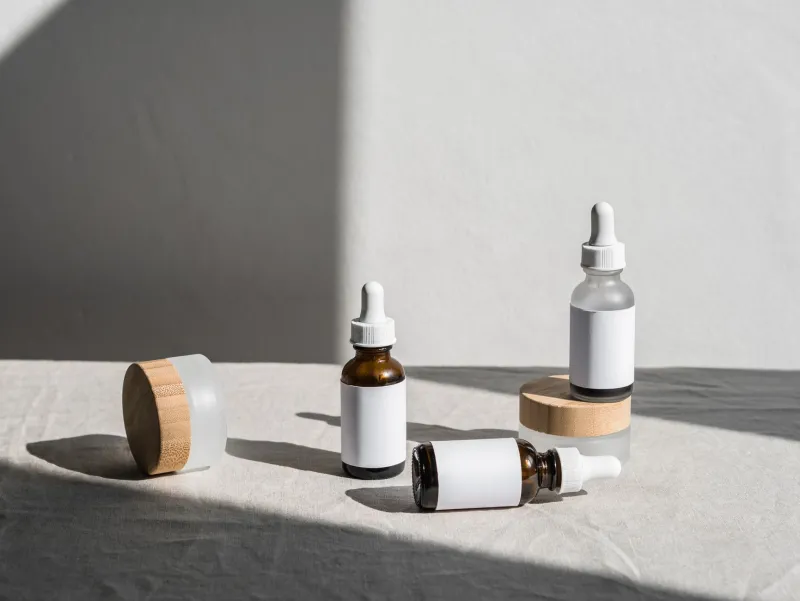
Picture this: you're standing in the skincare aisle at Target, holding a $48 serum that promises to "clinically prove" visible wrinkle reduction in four weeks. Sounds legit, right? It's got that clean, scientific font. Maybe a little white lab coat icon near the bottom. The word clinical is doing a lot of heavy lifting on that label.
Here's the thing nobody on the packaging tells you: the company ran that study themselves, used 22 volunteers, and called it done after a month. That's the "clinical" part. That's the whole thing.
This isn't a rare edge case. It's basically the standard operating procedure for cosmetic marketing in the United States — and it's been flying under the radar for decades.
The FDA Doesn't Regulate Cosmetics the Way You Think It Does
Most people assume the government is keeping a close eye on what goes on skincare product labels. The reality is messier. Under federal law, cosmetics — moisturizers, serums, anti-aging creams, SPF-free cleansers — are not required to prove their claims before hitting store shelves. That's a privilege reserved for drugs, which go through a completely different (and extremely rigorous) FDA approval process.
Cosmetic companies are technically forbidden from making drug-level claims. They can't say a product "treats" or "cures" anything. But they've become remarkably good at dancing right up to that line. Phrases like "visibly reduces," "appears firmer," and "clinically shown" are doing exactly what they're designed to do — make you feel like there's hard science behind the product without technically crossing into drug-claim territory.
The result? A marketing gray zone where brands can commission their own studies, define their own success metrics, and slap "clinically proven" on the box without any independent verification.
What a 'Clinical Study' Actually Looks Like in This Industry
Let's break down what's really going on behind most of these claims.
First, the sample sizes are often laughably small. Independent researchers and dermatologists generally want to see hundreds of participants before drawing conclusions about a skincare ingredient. Cosmetic brand studies? You'll commonly find 20, 30, sometimes fewer than 15 people involved. One frequently cited example in the dermatology community involves a major moisturizer brand that used just 10 subjects in a foundational study that still gets referenced in their marketing today.
Second, the studies are short. Real clinical research on skin treatments often runs for months or years, because skin changes slowly and results need to be sustained to mean anything. Two to four weeks is a common window in cosmetic studies — barely enough time for your skin to adjust to a new product, let alone prove long-term efficacy.
Third — and this is the part that really stings — the studies are almost always funded and conducted by the brand itself, or by a third-party lab that the brand is paying. That's not automatically fraudulent, but it creates an obvious incentive problem. Researchers working for the company that hired them tend to design studies they can win.
The Language Is Engineered to Sound More Than It Is
There's a reason these labels say "clinically shown" instead of "scientifically proven" or "FDA-approved." Each word is chosen carefully.
"Clinically shown" just means a study of some kind was conducted in a clinical-ish setting. It says nothing about the size, duration, independence, or methodology of that study. "Dermatologist tested" means a dermatologist used the product — not that they endorsed it, not that they ran controlled trials, not that they'd recommend it to patients. "Hypoallergenic" has no legal definition in the US at all. None. Any brand can print it on anything.
This language works because it borrows the credibility of real science without doing the actual work. When you hear "clinically proven," your brain connects it to the kind of research that gets published in medical journals and goes through peer review. That association is exactly what the marketing team is counting on.
How to Actually Evaluate a Skincare Claim
So what should you do when you're trying to figure out whether a product is worth your money? A few practical moves:
Look for published research on the ingredient, not just the product. If a serum claims to work because of niacinamide or retinol, search for independent studies on those ingredients specifically. Established actives like retinoids, vitamin C, and certain peptides have real, substantial research behind them — research that wasn't funded by whoever's selling you the moisturizer.
Ask who conducted the study. If a brand cites a clinical study, they should be able to tell you whether it was in-house or independent. If that information isn't on their website or available through a quick search, treat it skeptically.
Check the numbers. Any legitimate clinical claim should come with at least a rough description of the study — number of participants, duration, what was being measured. If a brand is proud of their research, they'll share those details. Vague claims with no supporting data are a red flag.
Be especially skeptical of before-and-after photos. These are almost never from controlled studies. Lighting, camera angles, makeup, and photo editing can create dramatic "transformations" that have nothing to do with the product.
Consult actual dermatologists. Not the ones in a brand's ad — real ones. The American Academy of Dermatology publishes consumer guides, and many board-certified dermatologists are active on platforms like YouTube and Instagram sharing evidence-based recommendations. That's free information from people who have no financial stake in what you buy.
The Bottom Line
None of this means every skincare product with a clinical claim is useless. Some genuinely contain well-researched ingredients at effective concentrations. The problem is that the label itself tells you almost nothing about which category a product falls into.
"Clinically proven" has become a marketing phrase, not a scientific guarantee. Until the FDA tightens its oversight of cosmetic claims — which consumer advocates have been pushing for, with limited success — the burden of due diligence falls on you as the shopper.
The honest truth is that your $12 drugstore moisturizer with proven ingredients and a boring label might be doing more for your skin than a $90 serum with a glossy clinical claim built on a two-week study of 15 people. The packaging won't tell you that. But now you know where to look.